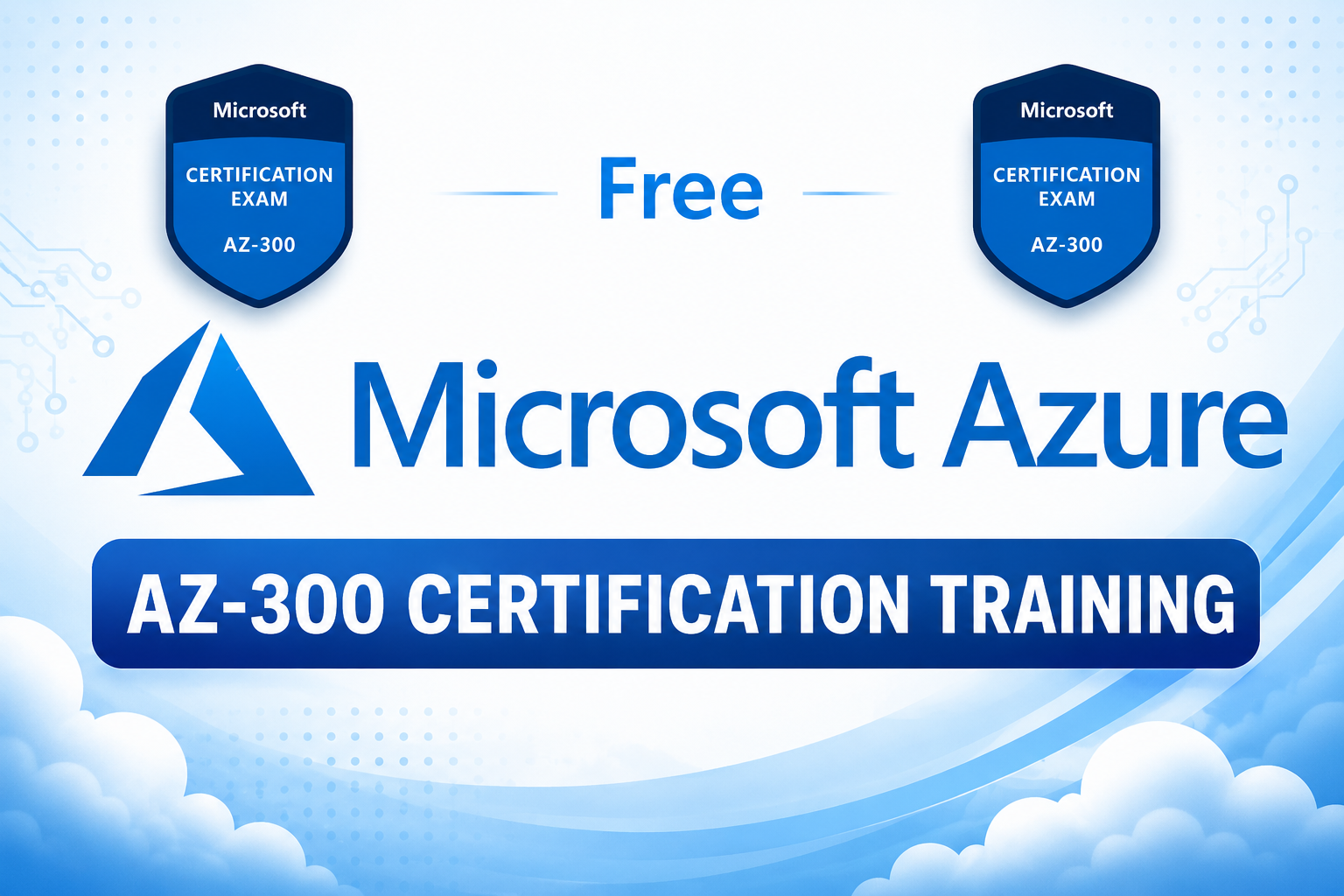
Microsoft Azure Architect Technologies Training (AZ-300)
🏗️ The 2026 IT Certification Roadmap
Most IT careers follow a logical progression: Foundational (getting your foot in the door) → Professional (specializing in a role) → Expert/Specialty (mastering a niche).
1. Foundational (The “Getting Started” Tier)
If you are new to the field, these are designed to prove you understand how computers, networks, and the cloud actually work.
-
CompTIA A+: The industry standard for help desk and technical support roles.
-
Google IT Support Professional: A popular, low-barrier entry point for absolute beginners.
-
Microsoft Azure Fundamentals (AZ-900): Essential for understanding cloud-based business environments.
2. Networking & Infrastructure
For those who want to build and manage the “pipes” of the internet and corporate offices.
-
CompTIA Network+: Vendor-neutral; covers the basics of connectivity.
-
Cisco CCNA: Highly respected; focuses specifically on Cisco hardware but is considered the “gold standard” for network engineers.
3. Cybersecurity
One of the highest-demand sectors in 2026.
-
CompTIA Security+: The most common first step into security.
-
Certified in Cybersecurity (CC) by ISC2: A newer, entry-level alternative to Security+.
-
CISSP: The “end-game” certification for security management (requires years of experience).
4. Cloud Computing
Crucial for modern businesses using AWS, Azure, or Google Cloud.
-
AWS Certified Solutions Architect (Associate): High market value for designing cloud systems.
-
Microsoft Azure Administrator (AZ-104): For those managing Windows-centric cloud environments.
📊 Comparison of Entry-Level Paths
| Certification | Focus | Best For | Difficulty |
| CompTIA A+ | Hardware/Troubleshooting | Help Desk Technician | Moderate |
| AZ-900 | Cloud Concepts | Business/Basic IT | Easy |
| CCNA | Networking/Switching | Network Engineer | High (for beginners) |
| Security+ | Risk/Compliance | Junior Security Analyst | Moderate |
🛠️ Where to find Official Study Resources
Instead of third-party training institutes that might be overly sales-focused, many professionals prefer “Official” or “Direct” learning paths:
-
Microsoft Learn: Free, high-quality documentation and sandboxes for all Azure and Microsoft 365 certs.
-
Cisco Learning Network: The official source for CCNA and CCNP study materials.
-
CompTIA Official: They offer their own “CertMaster” training, though it is often more expensive than third-party options like Udemy or Coursera.
-
Pearson IT Certification: The official publishing partner for many of these exams; great for practice tests and study guides.
Curriculum
- 16 Sections
- 0 Lessons
- 30 Hours
- Module 1: Introduction to Microsoft Azure and Cloud ComputingThis module introduces cloud computing fundamentals, Microsoft Azure services, cloud deployment models, Azure subscriptions, resource groups, and Azure management tools. Students will gain a strong foundation in Azure architecture and cloud solution design.0
- Module 2: Azure Governance and Resource ManagementStudents will learn Azure governance strategies including Azure Policy, Resource Manager (ARM), management groups, subscriptions, tagging, compliance controls, and cost management. The module focuses on designing secure and well-governed Azure environments.0
- Module 3: Identity and Access ManagementThis module covers Microsoft Entra ID (Azure AD), authentication methods, authorization, Single Sign-On (SSO), Conditional Access, Managed Identities, Privileged Identity Management (PIM), and Role-Based Access Control (RBAC). Students will learn how to design secure identity solutions.0
- Module 4: Azure Networking SolutionsStudents will explore Azure Virtual Networks, Network Security Groups, VPN Gateway, ExpressRoute, Load Balancers, Application Gateway, DNS services, Traffic Manager, and hybrid connectivity solutions. The module focuses on designing scalable and secure network architectures.0
- Module 5: Azure Compute SolutionsThis module introduces Azure Virtual Machines, Virtual Machine Scale Sets, Azure App Services, Azure Kubernetes Service (AKS), Azure Container Instances, and serverless computing using Azure Functions. Students will learn to design compute solutions based on workload requirements.0
- Module 6: Azure Storage SolutionsStudents will learn Azure Storage architecture, Blob Storage, File Storage, Queue Storage, Table Storage, Data Lake Storage, storage replication options, and storage security. The module focuses on designing highly available and cost-effective storage solutions.0
- Module 7: Database and Data Platform DesignThis module covers Azure SQL Database, Azure Cosmos DB, Azure Database Services, relational and non-relational databases, scalability strategies, data protection, and storage optimization. Students will learn how to select appropriate data solutions for business requirements.0
- Module 8: Application Architecture and IntegrationStudents will learn application architecture design using Azure API Management, Azure Service Bus, Event Grid, Event Hubs, Logic Apps, and messaging services. The module focuses on building scalable, event-driven, and microservices-based applications.0
- Module 9: Monitoring, Logging, and Operational ExcellenceThis module introduces Azure Monitor, Log Analytics, Application Insights, Workbooks, Alerts, Diagnostics, and operational monitoring strategies. Students will learn how to design proactive monitoring and observability solutions.0
- Module 10: Security, Compliance, and Key ManagementStudents will explore Azure Security Center, Microsoft Defender for Cloud, Azure Key Vault, encryption strategies, compliance frameworks, threat protection, and security best practices. The module focuses on designing secure cloud environments.0
- Module 11: Business Continuity and Disaster RecoveryThis module covers Azure Backup, Azure Site Recovery, high availability architectures, Recovery Point Objectives (RPO), Recovery Time Objectives (RTO), failover planning, and disaster recovery strategies. Students will learn how to build resilient cloud solutions.0
- Module 12: Migration and Hybrid Cloud SolutionsStudents will learn Azure migration strategies, Cloud Adoption Framework, Azure Migrate, workload assessment, database migration, hybrid cloud architecture, and modernization approaches for enterprise environments.0
- Module 13: DevOps and Infrastructure AutomationThis module introduces Infrastructure as Code (IaC), ARM Templates, Bicep, Azure DevOps, CI/CD pipelines, GitHub Actions, automated deployments, and configuration management. Students will learn modern cloud automation practices.0
- Module 14: Enterprise Architecture and Solution DesignStudents will learn architectural best practices, Well-Architected Framework principles, scalability design, cost optimization, performance efficiency, reliability, operational excellence, and enterprise solution planning.0
- Module 15: Real-World Azure Architecture ProjectsStudents will work on practical projects involving multi-tier applications, hybrid cloud solutions, disaster recovery implementation, secure enterprise networking, scalable application deployment, and cloud modernization initiatives.0
- Module 16: AZ-305 Certification and Career PreparationThe final module focuses on AZ-305 exam preparation, architecture case studies, interview questions, solution design scenarios, resume building, portfolio development, and career guidance. Students will be prepared for roles such as Azure Solutions Architect, Cloud Architect, Azure Consultant, Cloud Infrastructure Engineer, and Enterprise Architect.0
Courses you might be interested in
-
0 Lessons
-
0 Lessons
-
0 Lessons
-
0 Lessons