Informatica Administrator Online Training & Certification Guide
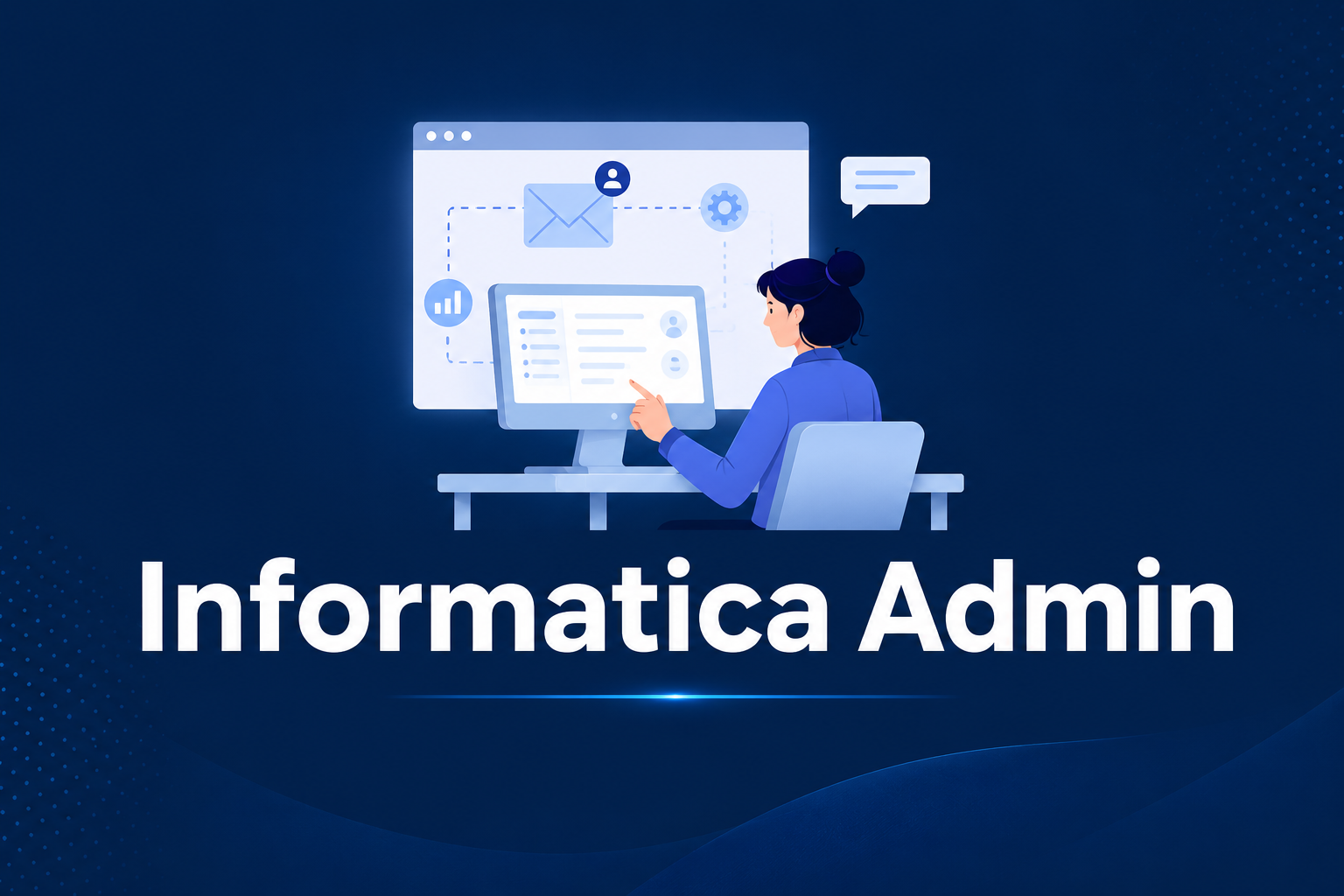
An Informatica Administrator is the backbone of an enterprise data ecosystem. They are responsible for ensuring high availability, security, and seamless collaboration across development and QA teams. ITGuru’s expert-led training prepares you to manage complex installations, domain configurations, and network optimizations in real-time environments.
### Course Strategic Overview
The Informatica Administrator role is a high-responsibility career path. This Informatica Admin Training moves beyond simple data moving; it focuses on the “engine room” of the platform. You will learn to manage production ecosystems, perform software installations, execute quality analysis, and handle critical network modifications to keep the enterprise data flowing without interruption.
### Key Training Features
-
20 Hours of Expert Instruction: Focused, high-impact sessions covering server-side management and domain services.
-
Lifetime Access: Secure entry to our Learning Management System (LMS) with all presentations and installation guides.
-
7 Specialized Admin Assignments: Hands-on tasks designed to simulate real-world server troubleshooting and maintenance.
-
2 Enterprise Projects: Manage a mock production ecosystem, from initial installation to multi-team collaboration setup.
-
24/7 Global Support: Technical assistance available at any hour for lab queries or environment setup.
-
Job Assistance & Referrals: Direct access to our network of 200+ global clients to help you secure a top-tier Administrator role.
### Informatica Admin Training Objectives
| Focus Area | Core Competencies |
| Environment Setup | Master the installation and configuration of the Informatica Domain and Nodes. |
| Service Management | Configure and optimize Repository Services, Integration Services, and Reporting Services. |
| Security & Users | Implement robust security via Users, Groups, Roles, and Privileges (Native and LDAP). |
| Maintenance | Learn backup and recovery strategies for the Informatica Repository and Domain. |
| Performance Tuning | Monitor and optimize server performance to handle heavy enterprise workloads. |
### Why Choose Informatica Administration?
-
Critical Career Path: Administrators are essential for any company using Informatica, making this a highly stable and well-paid IT role.
-
Master Complex Ecosystems: Learn how to bridge the gap between development teams, network management, and stakeholders.
-
Industry-Ready Certification: ITGuru’s curriculum is aligned with the latest industry standards to ensure you pass the Informatica Certified Professional exams.
### Training Options
-
Live Online Training (Preferred): Engage in real-time with veteran administrators who bring years of industry experience to the virtual classroom.
-
Corporate Training: Scalable solutions for businesses looking to upskill their internal IT and database teams.
-
Self-Paced Learning: Access premium video content on your own schedule with full support.
### Frequently Asked Questions (FAQ)
Q: Who can take this training?
A: This course is ideal for fresh graduates, IT professionals, and even ETL developers looking to transition into a management/administrative role.
Q: Will ITGuru help with the software environment?
A: Absolutely. Our trainers provide the environment and step-by-step guidance to execute practicals and assignments on your own machine.
Q: What is the trainer’s qualification?
A: All ITGuru trainers are industry veterans with a minimum of 8–10 years of real-time experience in Informatica Administration and Infrastructure.
Curriculum
- 15 Sections
- 0 Lessons
- 20 Hours
- Module 1: Introduction to Informatica AdministrationThis module introduces Informatica Administration concepts, architecture, domain management, services, and enterprise data integration environments. Students will understand the responsibilities of an Informatica Administrator and the role of administration in maintaining a stable ETL ecosystem.0
- Module 2: Informatica Architecture and ComponentsStudents will learn the core Informatica architecture, including Domains, Nodes, Services, Repository Service, Integration Service, Model Repository Service, and Application Services. The module provides a strong foundation for managing Informatica environments effectively.0
- Module 3: Installation and ConfigurationThis module covers Informatica PowerCenter installation, server setup, client tool installation, repository configuration, database connectivity, and environment setup. Learners will gain hands-on experience deploying Informatica in enterprise environments.0
- Module 4: Domain AdministrationStudents will learn how to create, configure, and manage Informatica Domains. Topics include domain configuration, node management, domain backup and recovery, service startup and shutdown procedures, and troubleshooting domain-related issues.0
- Module 5: Repository Service AdministrationThis module focuses on Repository Service creation, configuration, management, backup, restoration, version control, and repository maintenance. Students will understand how repositories support ETL development and deployment activities.0
- Module 6: Integration Service AdministrationStudents will learn how to create and manage Integration Services, configure service properties, optimize session performance, manage workflow execution, and monitor ETL processes within Informatica environments.0
- Module 7: Security and User ManagementThis module covers user administration, roles, groups, privileges, authentication methods, LDAP integration, access control, and security best practices. Learners will understand how to secure Informatica environments and protect sensitive business data.0
- Module 8: Workflow Monitoring and TroubleshootingStudents will explore workflow monitoring techniques, session log analysis, error handling, performance bottleneck identification, and troubleshooting methodologies. The module focuses on maintaining smooth ETL operations and minimizing downtime.0
- Module 9: Performance Tuning and OptimizationThis module teaches performance tuning strategies for repositories, workflows, sessions, integration services, and databases. Students will learn optimization techniques that improve ETL efficiency and reduce processing times.0
- Module 10: Grid Computing and High AvailabilityStudents will learn Informatica Grid architecture, load balancing, failover mechanisms, high-availability configurations, and disaster recovery planning. The module focuses on ensuring reliability and scalability in enterprise environments.0
- Module 11: Deployment and Migration ManagementThis module covers code migration, deployment groups, object migration, version management, release processes, and environment promotion strategies. Students will learn best practices for moving Informatica projects across development, testing, and production environments.0
- Module 12: Backup, Recovery, and Disaster ManagementStudents will learn repository backup procedures, service recovery techniques, disaster recovery planning, system restoration, and business continuity strategies. The module prepares administrators to handle critical system failures effectively.0
- Module 13: Informatica Cloud and Modern AdministrationThis module introduces Informatica Intelligent Cloud Services (IICS), cloud administration concepts, cloud connectivity, monitoring cloud services, and hybrid data integration environments. Students will gain exposure to modern cloud-based Informatica solutions.0
- Module 14: Real-World Administration ProjectsStudents will work on practical administration scenarios involving domain setup, service configuration, migration, performance tuning, security implementation, monitoring, and production support. These projects provide real-world enterprise administration experience.0
- Module 15: Certification and Career PreparationThe final module focuses on Informatica Administration interview preparation, certification guidance, troubleshooting scenarios, resume building, and industry best practices. Students will be prepared for roles such as Informatica Administrator, ETL Administrator, Middleware Administrator, Data Integration Administrator, and Production Support Engineer.0

Courses you might be interested in

-
0 Lessons
-
0 Lessons
-
0 Lessons
-
0 Lessons