

🚀 The Ultimate Guide to Big Data Hadoop Certification
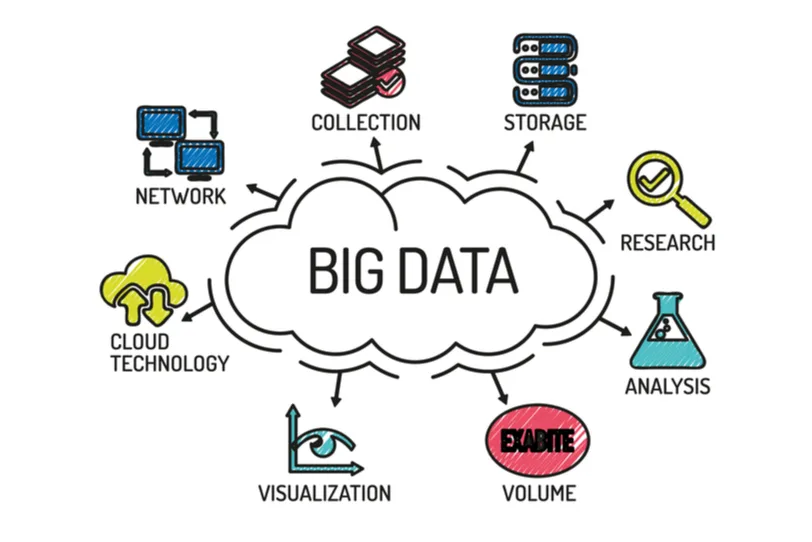
The world generates roughly 175 zettabytes of data annually. In 2026, the global Big Data market is projected to exceed $270 billion, with a staggering 39.6% CAGR. This guide outlines how a Hadoop certification transforms you from a traditional IT professional into a high-demand Big Data architect.
### Why Big Data Hadoop in 2026?
Standard relational databases (RDBMS) crumble under the weight of modern data. Hadoop provides the distributed “brain” needed to store and process petabytes across clusters of commodity hardware.
-
Scalability: Add “nodes” (servers) to your cluster without changing your data formats.
-
Cost-Efficiency: Use standard hardware instead of expensive proprietary storage.
-
Fault Tolerance: Hadoop automatically replicates data; if one server fails, another takes over instantly.
🛠️ Comprehensive Course Curriculum
A gold-standard certification doesn’t just teach Hadoop; it masters the entire ecosystem.
| Module | Key Focus Areas |
| 1. HDFS Architecture | Distributed storage, NameNode, DataNode, and Replication. |
| 2. MapReduce & YARN | Parallel processing logic and resource management. |
| 3. Apache Hive | SQL-like querying for Big Data (HiveQL). |
| 4. Apache Pig | Scripting for ETL (Extract, Transform, Load) operations. |
| 5. NoSQL with HBase | Real-time, random read/write access to large datasets. |
| 6. Data Ingestion | Sqoop (RDBMS to HDFS) and Flume (Log data streaming). |
| 7. Spark Integration | In-memory processing for lightning-fast analytics. |
💼 Career Impact & Salary Insights
The “Big Data Engineer” is currently one of the most lucrative roles in tech. Certification validates your ability to handle “The 5 Vs”: Volume, Velocity, Variety, Veracity, and Value.
Top Job Roles
-
Hadoop Developer: Designing and building Big Data applications.
-
Data Engineer: Maintaining the data pipelines that fuel AI and ML.
-
Hadoop Administrator: Managing cluster health, security, and performance.
-
Big Data Architect: Designing the end-to-end data strategy for enterprises.
Industry Fact: In 2026, certified Hadoop professionals earn 25%–40% more than non-certified peers. Entry-level salaries in the US often start at $110,000+, while in India, they range from ₹8 LPA to ₹18 LPA based on experience.
🏆 Key Features of Our Training
-
40+ Hours of Live Instruction: Led by industry veterans with 10+ years of experience.
-
CloudLab Access: Practice on a real-world multi-node Hadoop cluster without any local setup.
-
Industry-Based Projects: Work on datasets from Banking (Fraud Detection) and Retail (Customer Analytics).
-
Lifetime Access: Get perpetual access to updated course recordings and resources.
-
Placement Assistance: Resume building and mock interviews with 200+ global hiring partners.
❓ Frequently Asked Questions (FAQ)
Q. Do we offer any discount on Big Data Hadoop Training?
Yes! We provide competitive discounts for group enrollments, student referrals, and one-to-one trainer-led sessions. Additionally, when you enroll in our Big Data Hadoop course, you get one self-paced course of your choice for free. It’s the perfect opportunity to master two technologies simultaneously at a fraction of the cost.
Q. Can we schedule the Big Data and Hadoop Training based upon my availability?
Absolutely. We understand the busy schedules of working professionals and students. We offer Flexible Batch Timings, including early morning, late evening, and weekend-only batches. If you miss a live session, you can access the high-quality recording on your LMS dashboard immediately.
Q. Who will provide the environment to execute practicals?
ITGuru provides a Cloud-based Lab Environment. You don’t need a high-end expensive machine; you can access our pre-configured Hadoop Multi-Node cluster directly through your web browser. This ensures you spend 100% of your time practicing rather than troubleshooting installation errors.
Q. What is the qualification of a Big Data Hadoop Certification trainer?
Our trainers are Industry Architects with over 10+ years of hands-on experience in Big Data ecosystems. They are currently working with top MNCs and bring real-world problem-solving insights to the classroom. Every trainer is a subject matter expert with verified certifications in Hadoop, Spark, and Java.
Q. Do we offer placements for Big Data and Hadoop job seekers?
Yes, we provide 100% Placement Assistance. Our dedicated career support team helps you with:
-
Resume Building: Tailoring your profile for Big Data roles.
-
Mock Interviews: Technical and HR round preparation.
-
Direct Referrals: We share your profile with our 200+ global hiring partners across the USA, India, and the UK.
Q. Will IT Guru help me in getting certified in Big Data and Hadoop?
Definitely. Our curriculum is strictly aligned with the latest global certification exams (such as Cloudera and Hortonworks standards). We provide Certification Guidance sessions, sample exam questions, and “dumps” to ensure you pass your professional certification on the first attempt.
Q. Do we accept the Big Data Hadoop Training fee in installments?
To make our training accessible, we offer Easy EMI and Installment Options. You can pay the course fee in 2 or 3 interest-free installments. Please contact our support team at +91 955 010 2466 to discuss a payment plan that works for you.
Q. What are the Big Data Hadoop Certification live projects provided?
You will work on two major industry-strength projects:
-
Retail Data Analysis: Processing millions of transaction records to identify seasonal buying trends and inventory gaps using Hive and MapReduce.
-
Banking Fraud Detection: Building a real-time data pipeline to flag suspicious financial transactions using HBase and Sqoop.
Curriculum
- 16 Sections
- 0 Lessons
- 40 Hours
- Module 1: Introduction to Big Data and HadoopThis module introduces Big Data concepts, characteristics of Big Data (Volume, Velocity, Variety, Veracity, and Value), industry applications, and the Hadoop ecosystem. Students will understand how organizations use Hadoop to process and analyze massive datasets.0
- Module 2: Hadoop Architecture and EcosystemStudents will explore Hadoop architecture, distributed computing concepts, Hadoop clusters, and the core components of the Hadoop ecosystem. The module provides a strong foundation for understanding large-scale data processing environments.0
- Module 3: Hadoop Distributed File System (HDFS)This module focuses on HDFS architecture, NameNode, DataNode, block storage, replication, fault tolerance, file operations, and data management. Students will learn how Hadoop stores and manages large volumes of distributed data.0
- Module 4: Hadoop Cluster Setup and AdministrationStudents will learn Hadoop installation, configuration, cluster setup, node management, monitoring, maintenance, and troubleshooting. The module prepares learners to manage Hadoop environments effectively.0
- Module 5: MapReduce FundamentalsThis module introduces MapReduce programming concepts, Mapper and Reducer functions, data processing workflows, input-output formats, partitioning, and distributed processing techniques. Students will learn how Hadoop processes large datasets efficiently.0
- Module 6: Advanced MapReduce DevelopmentStudents will explore custom input formats, combiners, partitioners, counters, joins, optimization techniques, and performance tuning. The module focuses on building scalable and efficient MapReduce applications.0
- Module 7: YARN and Resource ManagementThis module covers Yet Another Resource Negotiator (YARN), resource allocation, scheduling, application management, cluster resource optimization, and workload balancing. Students will understand how Hadoop manages processing resources across clusters.0
- Module 8: Apache Hive for Data WarehousingStudents will learn Hive architecture, HiveQL, tables, partitions, bucketing, data querying, and warehouse management. The module focuses on enabling SQL-like analytics on Hadoop data.0
- Module 9: Apache Pig for Data ProcessingThis module introduces Apache Pig, Pig Latin scripting, data transformations, data analysis, user-defined functions, and workflow optimization. Students will learn simplified approaches to processing large datasets.0
- Module 10: Apache HBase and NoSQL Databases0
- Module 11: Apache Sqoop and FlumeThis module covers data ingestion tools including Sqoop for database integration and Flume for log collection and streaming data ingestion. Students will learn how to transfer data between Hadoop and enterprise systems.0
- Module 12: Apache Spark for Big Data AnalyticsStudents will learn Spark architecture, RDDs, DataFrames, Spark SQL, Spark Streaming, and machine learning integration. The module focuses on high-performance distributed data processing and analytics.0
- Module 13: Big Data Security and Performance TuningThis module focuses on Hadoop security, authentication, authorization, Kerberos integration, cluster monitoring, performance optimization, troubleshooting, and best practices for enterprise deployments.0
- Module 14: Cloud and Modern Big Data PlatformsStudents will explore Big Data deployment on cloud platforms, data lakes, real-time analytics, streaming architectures, and integration with modern cloud services and enterprise applications.0
- Module 15: Real-World Big Data Projects and Case StudiesStudents will work on practical projects involving customer analytics, log processing, recommendation systems, fraud detection, social media analytics, and large-scale data warehousing solutions. These projects provide hands-on industry experience.0
- Module 16: Certification and Career PreparationThe final module focuses on Hadoop interview preparation, resume building, portfolio development, project presentation, certification guidance, and industry best practices. Students will be prepared for roles such as Hadoop Developer, Big Data Engineer, Data Engineer, Spark Developer, Big Data Analyst, and Data Platform Engineer.0

Courses you might be interested in
-
0 Lessons
-
0 Lessons
-
0 Lessons